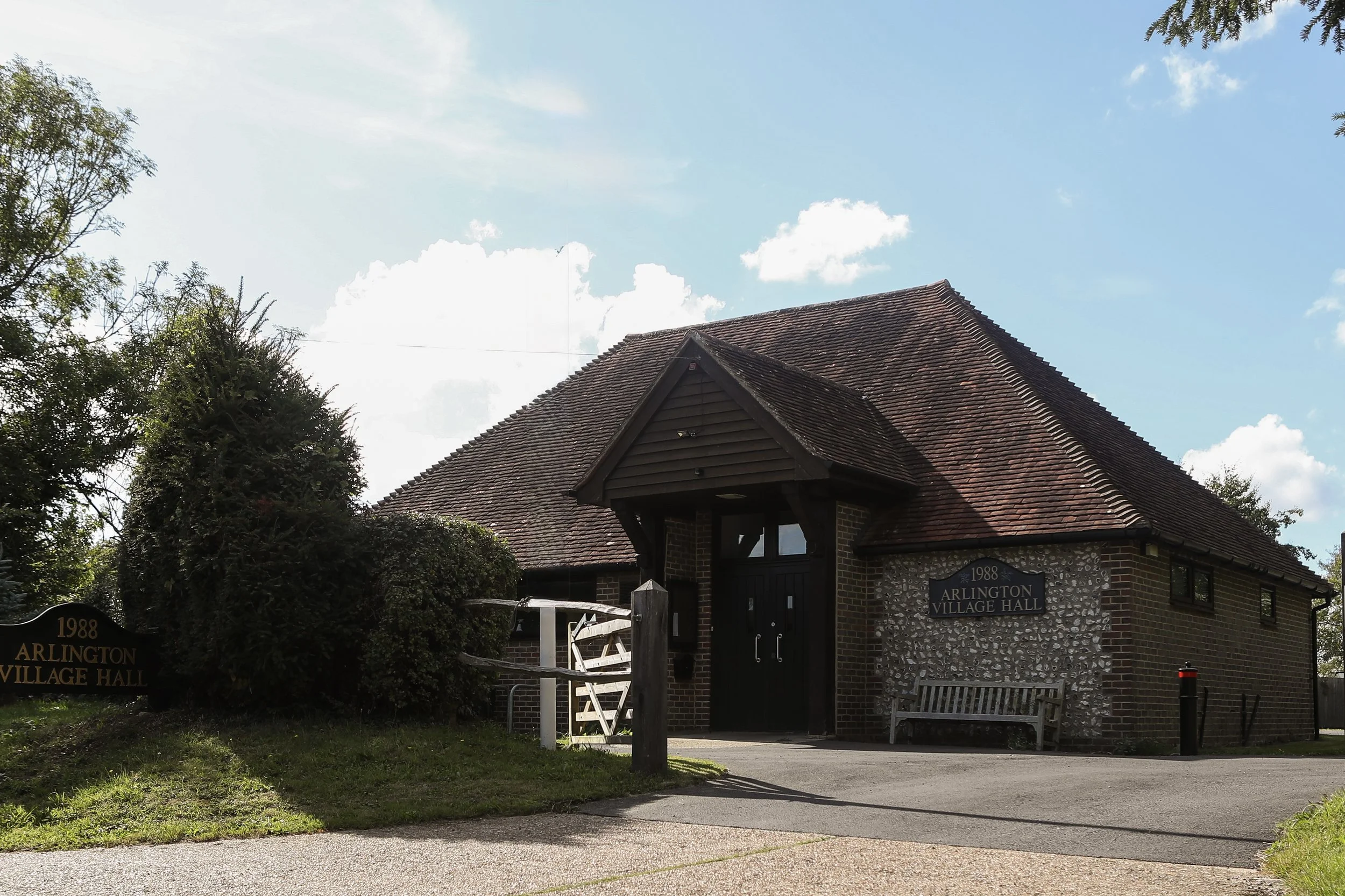
About Arlington Village Hall
Arlington Village Hall sits at the heart of our community, providing a welcoming space where neighbours come together for events, activities, and celebrations. Built in 1987, the hall continues the tradition begun by "the Hut" in the 1920s as a gathering place for Arlington's residents.
The hall offers a bright, open space measuring 6.75 metres by 12.2 metres, perfect for a variety of functions and events. Adjacent to the main hall is a comfortable Committee Room, ideal for smaller meetings and gatherings.
Our commercial kitchen comes fully equipped with modern counter tops, crockery, cutlery, and glassware, making it easy to cater for your event. The hall features ladies, gents, and disabled toilet facilities, with full wheelchair access throughout the building.
Outside, you'll find convenient parking facilities for over 30 cars, adjacent field for extra parking, weather permitting or as hire for part of the booking.
Our village hall sits in the heart of our community, less than a minutes’ walk from the Yew Tree Pub and St Pancreas Church.
The History of Arlington Village Hall
The Hut
In the early 1920s, Arlington had no communal meeting facility beyond St Pancras Church and the Yew Tree beer house. Following the First World War, the community felt a growing need for a dedicated gathering space. This desire coincided with a national movement to remember those who had not returned from the Great War.
Arlington, being a small community, suffered just one fatality during World War I: Jesse Levett, who served with the Royal Sussex Regiment. Jesse came from an extensive family that had lived in and around Arlington for many years. His family felt that a traditional war memorial was too grand for the loss of one life, and instead conceived the idea of creating a meeting place as a living memorial to Jesse.
When a nearby army camp at Seaford Head was being dismantled, the young men of Arlington joined forces to bring one of the redundant huts back to the village. They transported it by wagon and erected it on the Glebe field, owned by the church, near the Corner House. This became known as "the Hut."
For over 60 years, the Hut served as the hub of village life, hosting whist drives, social gatherings, and community events. However, being constructed of wood, it gradually began to show its age. The structure was starting to rot, lacked disabled access, and had only basic kitchen facilities. It became clear that Arlington needed a new hall.
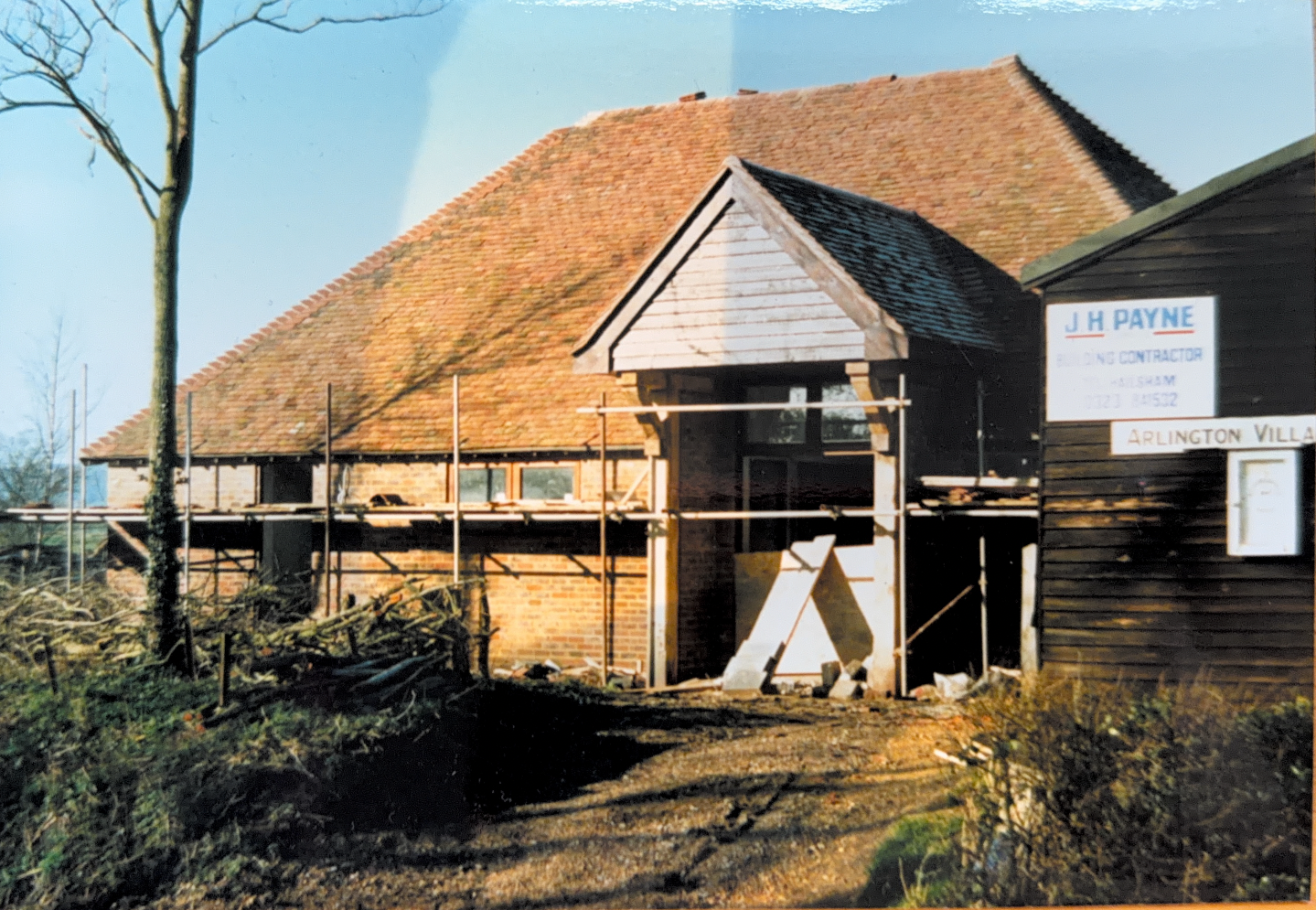
On the right is the Hut with a sign saying ‘Arlington Village…’ on the left you can see the new village hall emerging and then the Hut was later replaced with a car park.
The New Village Hall
In 1981, a committee was formed to bring the vision of a new village hall to life. An architect was commissioned, and fundraising began in earnest.
The Arlington Bluebell Walk and other local events raised a third of the construction costs. Wealden District Council generously donated another third. The final third came from a touching tribute: Herbert Levett, one of Jesse's three remaining brothers who lived at Woodside, bequeathed a significant sum in memory of his brother Jesse.
Construction began in 1987. The building had reached eaves height with wooden roof trusses in place, ready for battening and tiling, when disaster struck.
On Thursday night, October 15, 1987, the infamous storm—famously mis-forecast by Michael Fish—swept across southern England. The unfinished roof structure suffered significant damage. Insurance assessors condemned all the roof trusses, and the walls had to be dismantled down to window sill height.
Despite this setback, the community persevered. The hall was finally completed and opened in 1988. A plaque on the back wall commemorates Jesse Levett, the man whose memory inspired this lasting gift to the community.
Since 1988, Arlington Village Hall has continued to serve as a vibrant venue for village functions and private events. Regular clubs and groups use the space throughout the year, carrying forward the tradition that began with a simple hut nearly a century ago—a tradition of bringing the Arlington community together.